High-Rise Portable Toilet Rental for Vertical Construction
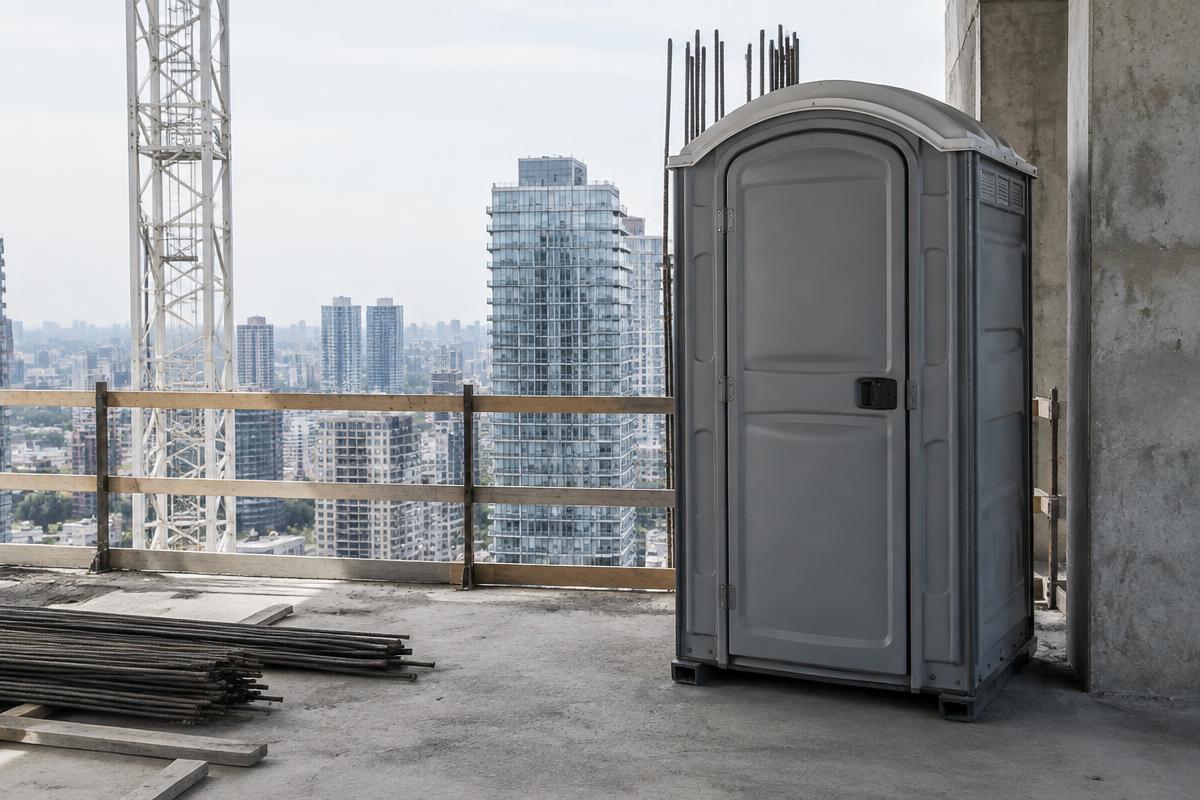
On a vertical project the real cost of a restroom is not the rental rate — it is the time crews lose walking down to grade. High-rise units exist to keep facilities on the working floor.
Equipment
How high-rise units differ
High-rise units are narrower and shorter than a standard jobsite unit so they clear a hoist car or a doorway, and they include lifting eyes or a frame for craning. Tanks are smaller, which means service intervals are tighter as occupancy rises.
Because they follow the structure up, placement is a scheduling problem as much as an equipment problem: the unit needs to move on the same cadence as the working deck, and service access has to be re-established after every move.
Plan the lift, not just the rental
Logistics
Planning a vertical project
- Keep a unit at grade too. Deliveries, inspectors and sitework crews should not use the hoist for a restroom trip.
- Follow the deck. A common convention is a unit within a few floors of the active working level.
- Tighter servicing. Smaller tanks plus concentrated crews usually mean more frequent visits than a grade-level unit.
- Winter and wind. Secure units against wind loading at height and confirm tie-down requirements with the provider.
Placement guidance for construction sites · Service frequency guidance
Compare
Related equipment
- Standard units — for grade-level and laydown areas
- ADA-accessible units — accessible facilities where required
- Hand-washing stations — paired at the working deck where feasible
- Holding tanks — for site offices and trailer facilities
Frequently asked questions
Price a high-rise sanitation plan
Send one structured request with your crew size, duration and equipment. We route it to available providers for your project.